Food Service and Wholesale Food Distribution Freight Across Ontario, Quebec and Atlantic Canada

Food service supply chains run on two clocks: the ambient product that keeps kitchens stocked, and the equipment that gets a kitchen open in the first place. Dependable Freight Solutions moves shelf-stable food freight, packaging, smallwares and commercial kitchen equipment between Ontario, Quebec and approved East Coast destinations, on dry and open deck trailers with the receiving conditions confirmed before dispatch.

What Wholesale Food Distribution Companies Need From a Carrier

Food service distribution is a volume business run on thin margins and fixed delivery cycles. Distributors receive in bulk from producers and importers, hold product in warehouses, then break it down for their own delivery fleets. The inbound side is where line haul carriers operate, and it rewards two things: freight that arrives inside its appointment, and paperwork that matches what the warehouse expects. Alongside that runs a separate freight stream that nobody plans for until it appears. Kitchens open, renovate and re-equip, and that means ovens, refrigeration units as freight, stainless fabrication, shelving and furniture arriving at a site working toward an opening date.

Food Service Freight We Handle

Ambient product, packaging and equipment all fall within review:

Food Service Businesses We Support

Broadline and Specialty Food Distributors

Warehouse operations receiving inbound volume from producers and importers. Dock scheduling is fixed and receiving compliance affects a supplier's standing with the account more than freight cost does.

Food and Beverage Producers Shipping Into Distribution

Manufacturers moving finished ambient product into distributor networks. Their freight is assessed on window compliance, pallet build and documentation accuracy rather than on the product itself.

Commercial Kitchen Equipment Dealers

Suppliers shipping ovens, refrigeration, fabrication and smallwares to restaurant and institutional sites. Freight is bulky, finish-sensitive and tied to an installation date other trades are working toward.

Restaurant Groups and Multi-Location Operators

Businesses supplying their own locations and opening new ones. Product freight is routine, but equipment freight arrives at storefronts and plaza units where access is limited and timing is tight.

Institutional and Contract Catering Operations

Kitchens inside hospitals, campuses, corrections and remote sites, receiving both supply volume and periodic equipment replacement into buildings that cannot pause operations for a delivery.

Restaurant Construction and Fit-Out Contractors

Teams completing kitchen builds and renovations. Deliveries land on active sites with no storage, where arrival sequence against the trade schedule matters as much as arrival date.

How Our Services Fit Food Service Movements

Less Than Truckload (LTL)

LTL suits smaller producer shipments into distributor warehouses, equipment orders for a single kitchen, and recurring partial volume that does not justify a full trailer. Because the freight shares trailer space, pallet build and case labelling carry directly into whether receiving accepts it cleanly.

Full Truckload (FTL)

FTL fits distributor inbound volume, full pallet programs and complete kitchen equipment packages. A dedicated trailer supports a firm appointment and keeps the load untouched between origin and receiving, which matters for both case integrity and equipment finish.

Heavy Haul

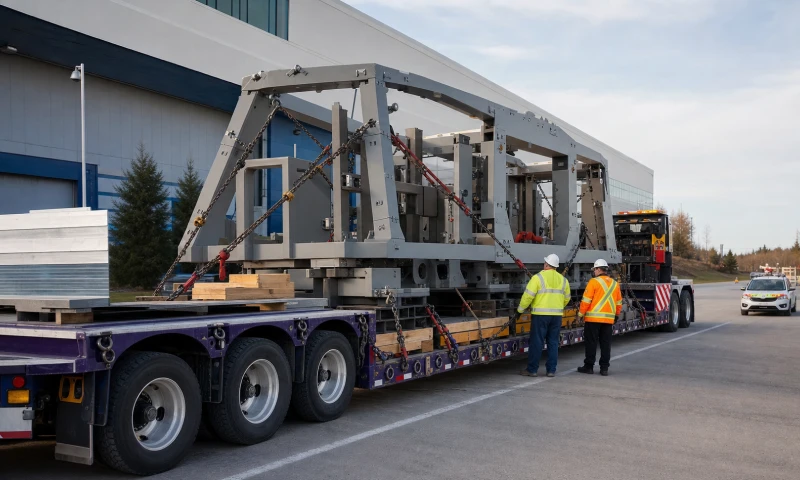
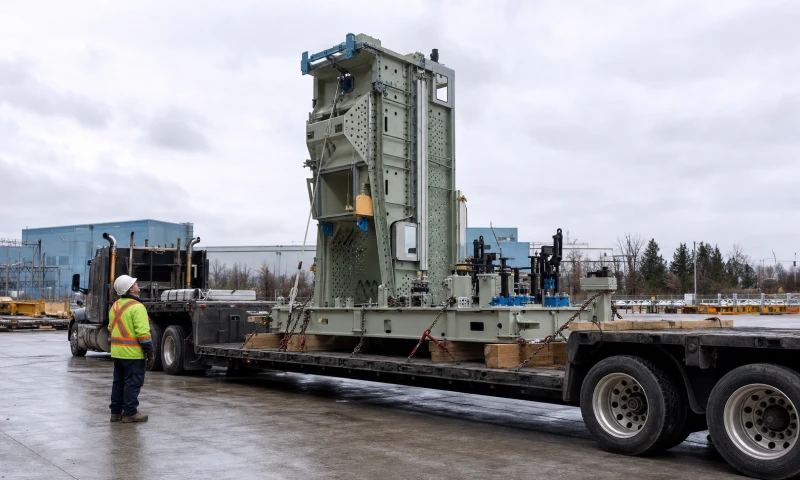
Heavy haul applies to food service freight beyond standard limits: processing and packaging line equipment, large walk-in assemblies, oversized fabrication and plant machinery. These move on specialized deck equipment with route review and permitting arranged ahead of time.

Choosing a Service in the Foodservice Distribution Industry

Service Best For Capacity Typical Food Service Cargo
LTL Smaller producer loads, single kitchen orders 1 to 6 pallets typical Packaged goods, disposables, smallwares, single units
FTL Distributor inbound, full equipment packages Full trailer Case volume, beverage pallets, complete kitchen packages
Heavy Haul Processing lines and oversized equipment Specialized equipment Packaging machinery, large fabrication, plant equipment
Food service freight is one area where the receiving end frequently overrides the freight characteristics. A modest equipment order moves as a full truckload because the site has one delivery window before the next trade takes the space.
The questions worth answering before booking:
  • Is the destination a warehouse with a dock and forklift, or a restaurant site with neither?
  • Does the receiver require a booked appointment, and who books it?
  • What are the pallet build and labelling requirements at the warehouse?
  • Are cases stackable, and to what height?
  • Is the freight going into an operating kitchen with restricted delivery hours? 
  • For equipment, what are the door widths and the path from the truck to the final position?
  • Is any of the product temperature sensitive, and has that been established rather than assumed? 
  • And on a build-out, where does this delivery sit in the construction sequence?
Send the receiving requirements with the enquiry. They shape the plan more than the freight does.

Equipment for Food Service Freight

Food service freight ranges from dense palletized case goods to tall stainless assemblies with finishes that mark if they are handled twice. The trailer follows the freight rather than the industry.

Roll-Tite

A rolling tarp over a flat deck, providing enclosure with side and overhead loading access. Suits palletized case goods, packaging and crated equipment needing protection from weather while allowing loading methods a rear door would restrict.

Flatbed

Open deck loading from any side. Applicable to crated equipment, walk-in panels, structural materials for kitchen construction and freight that tolerates tarping.

Step Deck

The lowered deck provides height clearance for tall equipment such as cooking suites, hoods and fabricated assemblies that would exceed legal height on a standard deck.

Lowboy

Lowest available deck height, used for tall and heavy items. Relevant to processing and packaging line equipment where clearance governs the route.

RGN (Removable Gooseneck)

The detachable gooseneck creates a ramp for drive-on or winch-on loading, applicable to wheeled and self-propelled equipment moving into or out of a food production site.

Freight Services All Across Canada:

Food Service Freight Transportation Across Ontario and Canada's East Coast

As a freight solution company Canada food distributors and equipment suppliers work with, Dependable Freight Solutions moves ambient product, packaging and commercial kitchen equipment along the corridors connecting Ontario with Quebec and Canada’s Atlantic provinces. Unlike broad Canadian transportation companies, we coordinate LTL, FTL and heavy haul shipments based on cargo specifications, origin, destination, equipment needs and delivery schedules, so a distributor’s inbound appointment and a restaurant’s opening date carry the same weight in planning.

Ontario to East Coast Food Service Freight

Shelf-stable product, packaging, disposables and commercial kitchen equipment originating with Ontario producers and dealers and travelling toward Quebec or approved Atlantic Canadian destinations.

East Coast to Ontario Food Service Freight

Maritime producer volume, empty packaging returns and decommissioned kitchen equipment moving from approved East Coast locations into Ontario.

Food Service Freight Transportation in Ontario

Freight services covering Ontario food producers, broadline distributors and equipment dealers supplying kitchens across the province.

Food Service Freight Transportation in Quebec

Freight movement serving Quebec distribution warehouses and food manufacturers, with connections between Ontario and Atlantic Canada.

Food Service Freight Transportation in New Brunswick

LTL, FTL and specialized transportation for approved New Brunswick routes serving regional distributors and hospitality operators.

Food Service Freight Transportation in Nova Scotia

Commercial food service freight transportation serving approved Nova Scotia locations, including kitchen fit-outs and equipment replacement projects.

Food Service Freight Transportation in Prince Edward Island

Commercial food service freight transportation serving approved Prince Edward Island locations, planned around warehouse receiving and site access.

Food Service Freight Transportation in Newfoundland and Labrador

Commercial food service freight transportation serving approved Newfoundland and Labrador locations, scheduled against distributor cycles and opening dates.

The Path From Booking to Receiving Dock

1.

Freight and receiving details

Pallet or case count, weight, dimensions, both addresses, and the receiving requirements including appointment rules and any warehouse instructions.
2.

Destination capability check

Dock or no dock, forklift availability, delivery hour restrictions and, for equipment, the access path from the trailer to the final position.
3.

Product suitability confirmation

Whether anything in the load carries a temperature requirement is established here, so freight we are not equipped for is identified before it is booked rather than after.
4.

Service and equipment selection

LTL, FTL or heavy haul is recommended with the trailer suited to the freight and the delivery conditions.
5.

Appointment and timing coordination

Delivery timing is planned against the receiving window, with booking responsibility confirmed so nothing falls between parties.
6.

Loading, delivery and documentation

Freight is loaded and secured, paperwork is prepared to match receiving requirements, and the load is delivered inside the agreed window.

Why Food Service Shippers Work With Us

Ambient Scope Stated Up Front

What we carry and what we do not is established at enquiry, so a load with a temperature requirement is redirected before it becomes a problem on delivery day rather than after.

Product and Equipment Under One Contact

A pallet program into a distribution warehouse and a full kitchen equipment package can run through the same relationship instead of two carriers with two sets of assumptions.

Warehouse Receiving Treated Seriously

Appointment rules, pallet build and documentation requirements are captured at booking, because in distribution these determine acceptance as much as the freight condition does.

Kitchen Equipment Planned as Project Freight

Ovens, fabrication and refrigeration units are planned around clearance, finish and installation sequence rather than moved as general freight that happens to be bulky.

Oversized Processing Equipment Handled In House

Packaging lines and plant machinery move on our own specialized deck equipment rather than being brokered out to a third carrier.

Site Access Confirmed Before Dispatch

Restaurant sites without docks are common, and we establish that condition during planning instead of sending a trailer to a curb it cannot unload at.

Food Service Freight Questions

Do you carry chilled, frozen, or fresh food products?
No. Our equipment is dry and open deck, and temperature-controlled transportation is not offered. Product with a temperature requirement should be placed with a carrier operating refrigerated equipment. Shelf-stable and ambient product is within scope.
No. Commercial refrigeration and freezer units are moved as equipment freight, in the same way any other appliance or machine is transported. The unit is cargo, not a running system, and no temperature is maintained in transit.
Not without unloading capability on site. Liftgate service and inside delivery are not offered, so the destination needs a dock, a forklift or equivalent means of receiving. This should be established at enquiry so the delivery point can be planned around it.
Yes. Cooking suites, refrigeration, fabrication, shelving and furniture are within scope, including oversized assemblies on specialized deck equipment. Delivery sequencing against the construction schedule is usually the detail that decides whether the day works.
Yes. Processing and packaging machinery moves on heavy haul equipment with route review and permitting arranged ahead of the date. Where a lift is needed at either end, rigging is arranged through partner companies.
Up to 8 axle configurations are available, and width, length and height are unrestricted where the move runs under permit with a route survey completed.
Send them with the enquiry. Appointment rules, pallet configuration, labelling and documentation requirements are captured during planning so the load is presented the way the warehouse expects it.
Our lanes are domestic, running between Ontario, Quebec and approved East Coast destinations.

Get in Touch with Dependable Freight Solutions

If you’re ready to schedule a shipment, need a price quote or want to learn more about our freight forwarding service, our team is here to help. We make freight transportation easy, efficient and reliable for businesses throughout Atlantic Canada. Dependable Freight Solutions provides professional freight services, speedy freight delivery and reliable logistics support!